
Practical notes for your repaint
Working around offices, guests & residents
An occupied building sets the terms of a decorating programme. The useful starting point is a map of when each room is available, which routes remain in use and who can make a decision when the plan needs to change.
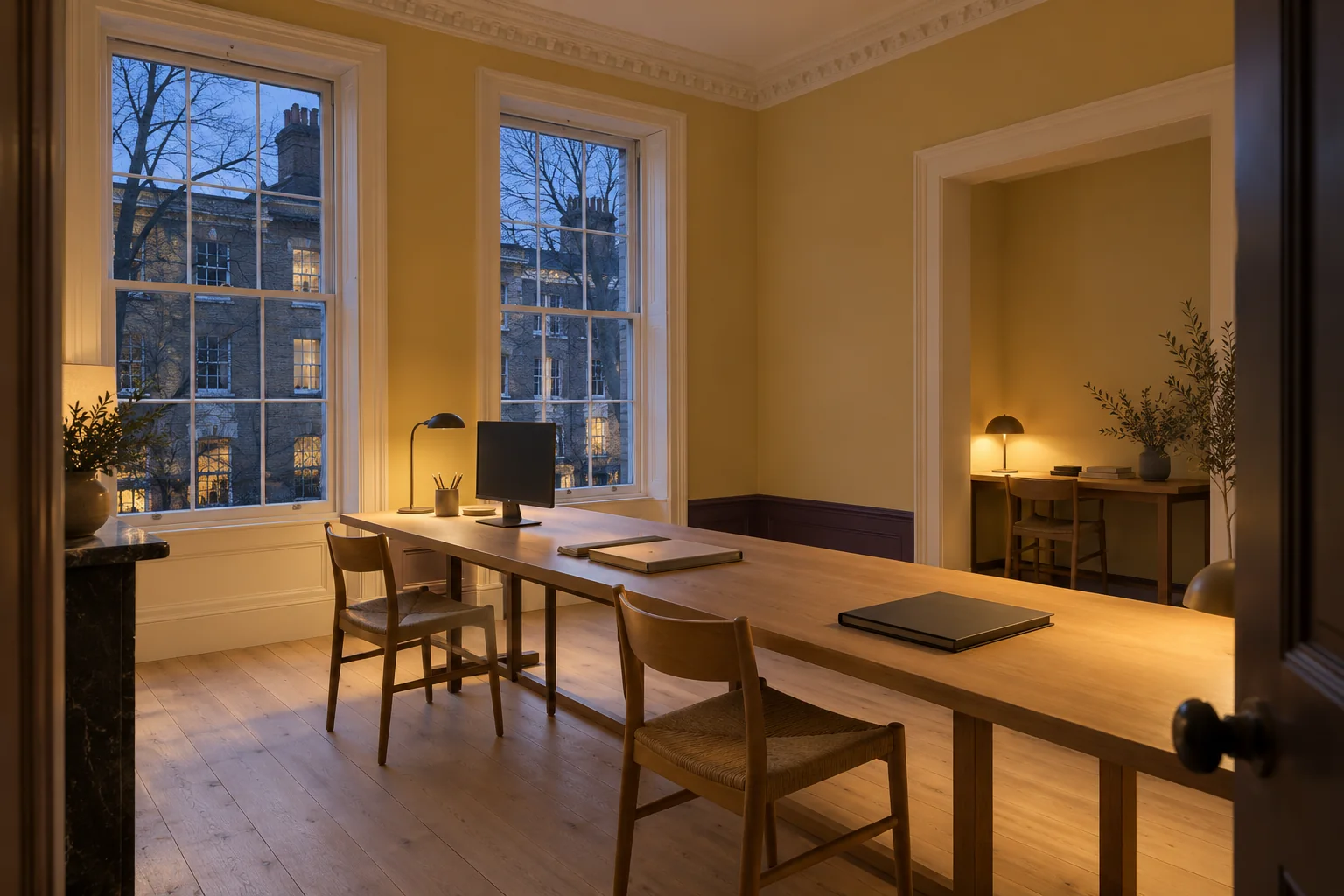
Give an office a clear evening instruction
An out-of-hours brief should say who opens and secures the building, where equipment may remain and which rooms are private. Agree the protection of desks and the handling of files with the occupier. Keep the next working day's requirements visible, including meetings and calls, while assessing whether the finish can be ready for the intended use.
Separate quiet painting from noisy preparation
Camden permits noisy building work without authorisation from 8am to 6pm on weekdays and from 8am to 1pm on Saturdays. Noisy work outside those hours, or on Sundays and bank holidays, needs authorisation. A quiet finishing phase can be planned around office hours, but that does not remove the need to check building rules, neighbours and any noisy activity.
Sources: Camden: noisy building works
Plan a hotel room beyond its final coat
A guest-room programme should include removal of contents, repairs, preparation, painting, drying, ventilation and reinstatement. Ask the operator to identify the inspection and housekeeping stages before the next booking. Several available rooms do not necessarily mean they can all be decorated together if the same corridor, storage area or staff support is needed.
Protect a resident's daily route
For common-parts decoration, agree how occupants reach their homes through each stage. Notices should describe the affected surfaces and the practical arrangements, with a contact for questions. Confirm the building's requirements for circulation and escape routes before choosing where equipment will stand; that decision belongs in the programme, not at the end of the day's work.
Use a single record for approvals and changes
Keep the agreed rooms, colours, access times and responsible contacts together. Record a newly exposed defect or a requested change against that instruction, then obtain the appropriate decision before proceeding. This is particularly useful when the owner, occupier and managing representative are different people, or when the work takes place while the usual contact is absent.
Your Bloomsbury repaint
The next step starts
with your brief.
Tell us what needs decorating, how the space is used and when access is possible. Include any listed-building requirements or shared-area approvals so we can discuss the scope on a clear basis.
A few details to begin
Your Bloomsbury address and a description of the surfaces help us understand the work.